Hormones influence nearly every aspect of a woman’s health — from the menstrual cycle and fertility to metabolism, mood, sleep and energy levels.
When hormones become imbalanced, women may experience symptoms such as irregular periods, fatigue, acne, weight changes, low mood or fertility difficulties. However, many women are told that their blood tests are “normal,” leaving them without clear answers.
At Holistic Gynaecology Clinic London, we take a broader and more personalised approach to hormonal health. This is why we introduced the Hormone Balance Panel, a comprehensive female hormone blood test in London developed by Dr Nele Dumpert, Consultant Community Gynaecologist.
Why Hormonal Imbalance Can Be Difficult to Identify
Hormones work as part of a complex network within the body. Instead of acting independently, they interact with several important physiological systems including:
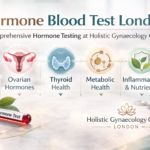
- Ovarian hormones regulating the menstrual cycle
- Thyroid function affecting metabolism and energy
- Metabolic health and insulin balance
- Inflammatory processes
- Nutritional status
- Stress and lifestyle factors
Small disruptions across several of these systems can create significant symptoms even when individual laboratory values fall within the “normal range.”
For example:
- Thyroid dysfunction may contribute to fatigue, hair loss and menstrual irregularities.
- Insulin resistance is closely linked to polycystic ovary syndrome (PCOS).
- Nutrient deficiencies such as iron or vitamin B12 may worsen fatigue.
- Chronic inflammation can affect metabolic and hormonal pathways.
Understanding these interactions is essential when investigating hormonal symptoms.
Why Cycle Timing Matters in Hormone Testing
Hormone levels fluctuate throughout the menstrual cycle.
For accurate interpretation, we measure reproductive hormones between day 2 and day 4 of the menstrual cycle, when baseline hormone levels are most reliable.
If your periods are irregular or absent, you may take the test on a random day.
Please attend your blood test appointment at 9am after a strict 12-hour fast. This preparation allows us to accurately assess important metabolic markers, including insulin levels and inflammation.
Following these instructions carefully helps ensure the most reliable and clinically meaningful results.
The Hormone Balance Panel: A Comprehensive Hormone Blood Test
The Hormone Balance Panel was designed to provide a more complete picture of hormonal health than standard blood tests.
Instead of focusing on a single hormone, this assessment evaluates multiple systems that influence hormonal balance, including:
- Ovarian hormone function
- Thyroid function and thyroid autoimmunity
- Adrenal and androgen balance
- Metabolic health and insulin regulation
- Systemic inflammation
- Nutritional markers
- General health indicators
By analysing these systems together, clinicians can identify patterns that may contribute to symptoms such as:
- Irregular or heavy periods
- Suspected PCOS
- Fertility challenges
- Chronic fatigue
- Acne or hair thinning
- Unexplained weight gain
- Thyroid-related symptoms
- Perimenopausal hormonal changes
Personalised Interpretation and Holistic Care
At Holistic Gynaecology Clinic London, laboratory results are never interpreted in isolation.
Each result is reviewed within the context of the individual patient, including:
- Symptoms and medical history
- Menstrual cycle pattern
- Stress levels and lifestyle
- Nutrition and exercise habits
- Reproductive goals
Based on this assessment, we create a personalised care plan, which may include:
- Nutritional guidance
- Targeted supplementation
- Lifestyle and metabolic optimisation
- Herbal medicine
- Body-identical hormone therapy (when clinically appropriate)
- Further investigations if required
Our aim is to provide clarity and a structured pathway toward improved hormonal health.
Blood Testing in Collaboration with Clinilabs London
Blood samples for the Hormone Balance Panel are collected in collaboration with Clinilabs in Central London, a respected medical laboratory known for high-quality diagnostic services.
Samples are taken by experienced nursing staff in a calm and professional environment, with patient comfort and safety as a priority.
Who Should Consider Hormone Testing?
A comprehensive female hormone blood test in London may be helpful if you experience:
- Irregular or absent periods
- Suspected PCOS
- Fertility concerns
- Severe PMS or PMDD
- Unexplained fatigue
- Weight gain despite healthy lifestyle
- Hair thinning or acne
- Thyroid-related symptoms
- Early perimenopausal symptoms
Early investigation can help identify underlying imbalances and guide effective treatment strategies.
Frequently Asked Questions
What is the best hormone blood test for women?
A comprehensive test should evaluate multiple systems influencing hormones, including ovarian hormones, thyroid function, metabolic health, and inflammation. By examining these factors together, clinicians can better understand the underlying causes of hormonal symptoms.
When should hormone testing be done during the menstrual cycle?
Most reproductive hormones are best tested between day 2 and day 4 of the menstrual cycle.
Can hormone tests diagnose PCOS?
Blood tests can help assess hormonal patterns associated with PCOS. Diagnosis may also involve ultrasound imaging and clinical assessment.
Is hormone testing helpful for perimenopause?
Yes. Hormone testing can help clarify symptoms during the transition toward menopause, especially when cycles become irregular.
Book a Hormone Blood Test in London
Appointments for the Hormone Balance Panel are available at Holistic Gynaecology Clinic London.
To learn more or schedule a consultation:
🌐 Website
https://holisticgynaecologylondon.co.uk
📅 Book an appointment
https://holisticgynaecologylondon.co.uk/contact/
Our team will provide detailed preparation instructions to ensure your test is performed at the most appropriate time in your cycle.
References
NHS. Menstrual cycle overview.
https://www.nhs.uk/conditions/periods
NHS. Polycystic ovary syndrome (PCOS).
https://www.nhs.uk/conditions/polycystic-ovary-syndrome-pcos
NICE Guidelines NG23. Menopause: diagnosis and management.
https://www.nice.org.uk/guidance/ng23
British Menopause Society. Clinical guidance for healthcare professionals.
https://thebms.org.uk
Royal College of Obstetricians and Gynaecologists (RCOG). Women’s health resources.
https://www.rcog.org.uk